Choosing between white-label and private-label bottled water can help businesses build brand recognition, serve customers consistently and create a branded experience. However, the two arrangements can differ in how much control a business has over branding, product specifications and supplier arrangements.
For hotels, corporate offices, event organisers, retailers and distributors, understanding these differences is an important first step before choosing a bottled water supplier.
For businesses exploring alternatives to conventional PET packaging, PLA-bottled drinking water is another option worth evaluating. This guide explains how white-label and private-label bottled water work, how they differ and what to discuss with a supplier before placing an order.
What Is White-Label Bottled Water?
White-label bottled water is a finished bottled water product supplied by a manufacturer or supplier that multiple businesses may be able to sell under their own branding.
Depending on the supplier’s offering, the business may be able to use its logo, brand name or other approved label elements on the product. The available branding options and degree of customisation depend on the supplier’s arrangements.
White-label bottled water can be suitable for businesses that want branded drinking water without managing the entire production and supply process themselves.
Potential buyers include:
- Hotels and hospitality businesses
- Corporate offices
- Event and wedding organisers
- Retailers
- Distributors and resellers
Before choosing this model, confirm whether the supplier permits your intended branding and what customisation options are available.
What Is Private-Label Bottled Water?
Private-label bottled water is a finished product sold under a business’s own brand. The supplier provides the bottled water, while the business develops and promotes its brand identity.
The exact arrangement varies. Some suppliers offer established product formats with approved branding options, while others may support additional product or packaging specifications.
Private-label bottled water can help a business create a consistent branded offering for customers, guests, employees or event attendees.
For example, a hotel may want bottled water that complements its guest experience, while an event organiser may want branded water for attendees. A distributor may be interested in supplying bottled water under an agreed brand arrangement.
The supplier’s capabilities, branding permissions, minimum order requirements and commercial terms should always be confirmed before making a commitment.
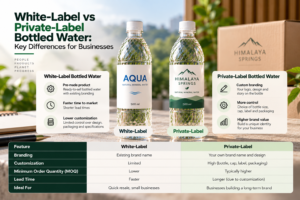
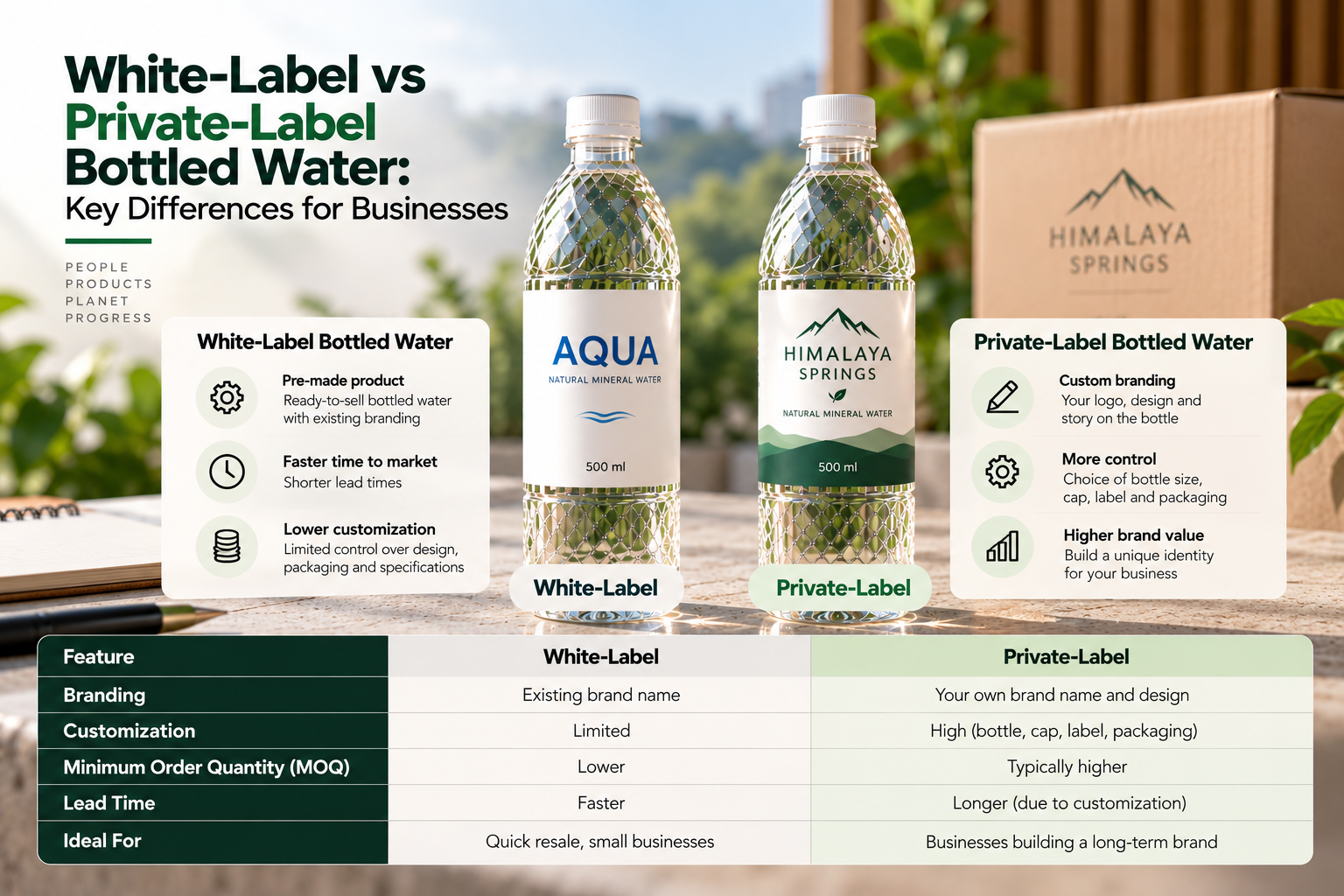
White-Label vs Private-Label Bottled Water: Key Differences
Although the terms are sometimes used interchangeably, their meaning can vary between suppliers. The table below explains the general distinction.
| Factor | White-Label Bottled Water | Private-Label Bottled Water |
|---|---|---|
| Branding | An existing product offered under approved branding arrangements | A product sold under the buyer’s own brand |
| Product options | Usually based on the supplier’s available product range | Depends on the supplier’s available specifications and customisation |
| Brand control | Depends on the agreement | Depends on the agreement and approved brand requirements |
| Setup | May use an established product and process | May require additional coordination for branding and specifications |
| Best suited for | Businesses seeking a straightforward branded supply arrangement | Businesses building a distinct brand identity |
| Supplier agreement | Defines permitted branding and supply terms | Defines branding, product specifications and supply terms |
Important: These are general distinctions, not universal rules. Some suppliers use the terms differently, so ask for a written explanation of the exact arrangement being offered.
Which Option Is Better for Your Business?
The right choice depends on your business model, branding goals and purchasing requirements.
Hotels and Hospitality Businesses
Hotels, resorts and hospitality venues may want bottled water that fits their guest experience and brand presentation.
When comparing suppliers, consider product availability, branding permissions, order quantities, documentation and the supplier’s ability to meet your purchasing requirements.
Corporate Offices
Businesses supplying drinking water to employees, visitors or meeting attendees may prioritise consistent supply, straightforward procurement and clear commercial terms.
White-label or private-label arrangements may be appropriate depending on whether the company needs a simple branded product or a more distinct brand offering.
Weddings and Events
Event planners may want branded bottled water that complements the event’s visual identity.
Before confirming an order, establish the required quantity, delivery arrangements, approved artwork process and timeline. Do not assume that a supplier can accommodate a particular label design or delivery schedule without confirmation.
Retailers and Distributors
Retailers and distributors should evaluate the product offering, permitted sales channels, commercial terms and ongoing supply arrangements.
A private-label arrangement may be worth exploring when building a separate brand, while a white-label arrangement may suit a business looking for an established product with an agreed branding option.
The best choice is the one that fits the supplier’s actual offering and your business requirements.
Where Does PLA Fit Into White-Label and Private-Label Bottled Water?
PLA stands for polylactic acid, a material commonly produced from fermented plant-derived sugars or starches. It is used in selected packaging applications, including some bottles and food-service products.
In bottled water, PLA is relevant to the bottle’s packaging material rather than the distinction between white-label and private-label supply.
A white-label or private-label arrangement describes how a product is supplied and branded. PLA describes the material used in the bottle. These are two separate considerations.
What Is PLA-Bottled Water?
PLA-bottled water is drinking water supplied in bottles made using polylactic acid-based material. Businesses considering this option should verify the actual bottle composition and the supplier’s product-specific documentation.
PLA-based packaging is often discussed as an alternative to conventional petroleum-based plastics, but it should not automatically be described as biodegradable or compostable in every environment. End-of-life outcomes depend on the specific product, material formulation and available waste-management infrastructure.
Businesses should assess the packaging’s practical suitability alongside branding, supply and compliance requirements.
Can You Choose PLA for Your Own-Branded Bottled Water?
That depends on the supplier’s available products and branding arrangements.
If you are considering private-label or white-label drinking water in PLA-based bottles, ask the supplier to confirm:
- Whether finished drinking water in PLA-based bottles is available
- The exact packaging material and relevant product documentation
- Which branding and labelling options are permitted
- Applicable order quantities and commercial terms
- Product, food-contact and regulatory documentation relevant to the intended market
- Storage, transport and disposal guidance for the specific packaging
Do not assume that every supplier offering private-label bottled water also supplies PLA-bottled products.
What Should You Ask a Bottled Water Supplier?
Before choosing a supplier, discuss the following points.
1. What Product Is Actually Available?
Confirm that the supplier offers the finished drinking water product you need. If PLA-based packaging is important to your decision, ask for confirmation of the specific packaging material rather than relying on general sustainability language.
2. What Branding Options Are Available?
Ask whether the arrangement supports your intended brand name, logo and label requirements. Request written confirmation of what is permitted and whether artwork approval is required.
3. What Documentation Can the Supplier Provide?
Request relevant product, packaging and regulatory documentation. Verify that any environmental, biodegradability or compostability claims are supported by evidence applicable to the specific product.
4. What Are the Order Requirements?
Ask about minimum order quantities, order increments, pricing, payment terms and any additional charges. These details vary by supplier and should be confirmed before placing an order.
5. Can the Supplier Meet Your Supply Needs?
Discuss the required quantity, delivery location, expected schedule and arrangements for repeat orders. Confirm the supplier’s actual delivery capabilities before committing to a timeline.
6. What Happens After the First Order?
If you expect recurring purchases, establish how repeat orders will be handled, whether branding specifications remain consistent and how changes to product availability or commercial terms will be communicated.
Exploring PLA-Bottled Water for Your Business
Not A PET Bottle focuses on finished drinking water in PLA-based bottles for businesses exploring alternative bottled water packaging.
If you are evaluating a white-label or private-label bottled water arrangement, you can discuss your intended application, estimated order quantity and branding requirements with the team. Product availability, customisation options, commercial terms and other requirements should be confirmed directly.
Explore the packaged drinking water offering or contact Not A PET Bottle to discuss your requirements.
Frequently Asked Questions
Is white-label bottled water the same as private-label bottled water?
The terms are sometimes used interchangeably. Generally, white-label refers to an existing product offered to multiple businesses under approved branding arrangements, while private-label refers to a product sold under a business’s own brand. The exact distinction depends on the supplier’s agreement.
What does PLA stand for?
PLA stands for polylactic acid. It is a polymer commonly produced from fermented plant-derived sugars or starches and used in selected packaging applications.
Is PLA-bottled water the same as private-label bottled water?
No. PLA describes the bottle material, while private-label describes the branding and supply arrangement. A product’s availability in PLA-based packaging depends on the supplier.
Is a PLA bottle always biodegradable or compostable?
No. These properties depend on the specific formulation, product design and conditions. Businesses should check product-specific evidence and disposal guidance before making environmental claims.
What businesses can consider white-label or private-label bottled water?
Hotels, offices, event organisers, retailers and distributors may explore these arrangements, depending on their needs and the supplier’s available products and terms.
How can I enquire about PLA-bottled drinking water?
Visit the Not A PET Bottle contact page to discuss your business requirements and confirm product availability, branding options, order quantities and commercial terms.
Final Thoughts
White-label and private-label bottled water can both support a business’s branding strategy, but the right arrangement depends on the level of branding control, product availability and supply terms you need.
PLA adds a separate packaging consideration. Before choosing PLA-bottled drinking water, verify the material, supporting documentation and practical end-of-life options.
By confirming these details upfront, businesses can make a more informed decision about their branded bottled water supply.