Ordering bottled water in bulk requires more than estimating how many bottles your business will use. You also need to consider the intended application, packaging requirements, branding preferences, delivery locations and the supplier’s commercial terms.
For hotels, corporate offices, event organisers, retailers and distributors, these details help make the purchasing process more organised and reduce the risk of ordering too much or too little.
If you are considering a PLA bottled water bulk order, it is worth preparing your requirements before requesting a quotation. This guide explains how to estimate demand, evaluate your needs and discuss bulk drinking water supply with a supplier such as Not A PET Bottle.
1. Estimate Your Business’s Bottled Water Requirements
Start by estimating how much drinking water your business will need over a specific period. Your calculation should reflect actual consumption or expected demand rather than an arbitrary order quantity.
The method depends on how you plan to use the water.
For Hotels and Hospitality Businesses
Estimate the number of rooms occupied, expected guests, average stay duration and how many bottles you typically provide per guest.
For example, a hotel supplying bottled water to occupied rooms may calculate its requirement using the expected number of guest stays and its usual bottle allocation. Additional demand may arise from conferences, restaurants or events hosted on the property.
For Corporate Offices
Consider the number of employees, visitors, meetings and working days covered by the order. If bottled water is intended only for meeting rooms or visitors, your requirement will differ from an arrangement that supplies every employee.
For Events and Weddings
Calculate the expected attendance and the number of bottles planned per attendee. Consider the event duration, weather, availability of refill stations and whether drinking water will also be served through other arrangements.
For Retailers and Distributors
Estimate expected customer demand, sales history, inventory levels and the time required to replenish stock. A distributor should also consider how much inventory can be stored and managed before placing a large order.
Use a Simple Demand Formula
A useful starting point is:
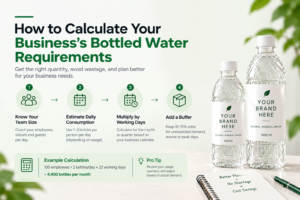
Required bottles = Expected users or attendees × Planned bottles per person
For recurring requirements, calculate demand for the entire supply period. Add a reasonable contingency only when it is justified by attendance uncertainty, consumption patterns or operational needs.
Your final order quantity should also account for the supplier’s available order increments and commercial requirements.
2. Define the Intended Use Before Requesting a Quote
The supplier needs to understand where and how you plan to use the bottled water. This helps establish whether the available product is appropriate for your business requirements.
Common applications include:
- Guest rooms and hospitality services
- Corporate offices and meeting rooms
- Conferences, exhibitions and business events
- Weddings and private functions
- Retail sales
- Wholesale distribution and resale
If the water will be sold to customers, clarify your intended sales channel and branding requirements. If it will be provided to guests or employees, explain the expected consumption pattern and supply frequency.
For businesses specifically considering PLA-based packaging, request confirmation of the actual packaging material and the documentation available for the product. Do not assume that every bulk bottled water supplier offers PLA-based bottles.
3. Confirm the Available Product and Packaging Specifications
Before placing a PLA bottled water bulk order, establish exactly what the supplier can provide.
Discuss the following:
- Available finished drinking water products
- Bottle specifications and available sizes, if offered
- Packaging material and supporting documentation
- Product labelling and required information
- Storage and handling instructions
- Relevant product and regulatory documentation
PLA stands for polylactic acid, a polymer commonly produced from fermented plant-derived sugars or starches. It is used in selected packaging applications, including certain bottle formats.
However, PLA-based packaging should not automatically be assumed to be biodegradable or compostable under every disposal condition. If environmental performance is important to your purchasing decision, ask for product-specific evidence and appropriate disposal guidance.
You can explore the packaged drinking water range to learn more about Not A PET Bottle’s offering.
4. Decide Whether You Need Branded or Unbranded Supply
Your branding requirements can affect the supplier arrangement and quotation process.
Some businesses need drinking water for internal use, while others want the product to support their own brand identity.
Before requesting a quotation, clarify whether you need:
Standard supply: Bottled water for use by your organisation, subject to the supplier’s available product and labelling arrangements.
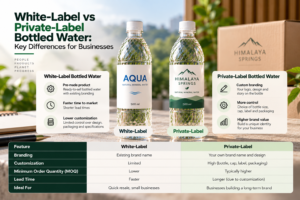
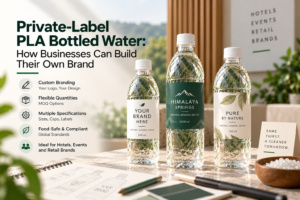
White-label or private-label supply: Finished bottled water supplied under an agreed branding arrangement, subject to the supplier’s capabilities and approval process.
If you want your own branding, ask the supplier to confirm whether it can accommodate your requirements. Discuss permitted logo use, artwork specifications, label approval, additional charges and any quantity or lead-time implications.
Do not assume that custom labels, specific bottle designs or particular branding options are available until the supplier confirms them.
For a broader explanation of branded supply arrangements, read our guide to white-label and private-label bottled water.
5. Determine the Order Quantity and Supply Frequency
Once you have estimated demand and confirmed the intended use, decide how much water you need for the initial order.
The right quantity depends on several factors:
- Expected consumption or sales
- Storage capacity
- Available working capital
- Product availability
- Supplier minimum order requirements
- Delivery arrangements
- Expected time between repeat orders
A one-time event may require a single delivery covering a defined period. A hotel, office or distributor may instead need a recurring supply arrangement.
For recurring purchases, estimate your typical consumption per week or month and discuss whether the supplier can accommodate your preferred ordering frequency.
Important: Minimum order quantities, order increments and repeat-order options vary by supplier. Request confirmation before finalising your procurement plan.
6. Confirm Delivery Locations and Logistics
A bulk order is only useful if the product can be delivered to the required location under workable terms.
Provide the supplier with the complete delivery address and explain any relevant access restrictions or receiving arrangements.
For multiple locations, prepare a separate requirement for each destination. This is particularly useful for businesses operating across multiple offices, hotel properties, retail locations or event venues.
Discuss:
- Delivery location or locations
- Required delivery dates
- Receiving hours and access restrictions
- Unloading and storage arrangements
- Whether deliveries can be divided across locations
- Applicable transport charges
- Responsibility for receiving and checking the order
If the order is for an event, coordinate delivery with venue access, setup and the time the water will be needed.
Do not assume that a supplier covers every location or can meet a specific delivery schedule. Confirm the available service area and delivery arrangements directly.
7. Plan Your Ordering Timeline
Start the procurement process early enough to allow for product confirmation, quotation, payment arrangements, branding approvals if applicable and delivery planning.
The required lead time may vary depending on product availability, order size, packaging requirements and destination.
For events, work backwards from the date the water must be available at the venue. For recurring business supply, establish a reorder point based on consumption and the confirmed replenishment timeline.
A simple planning checklist can help:
- Estimate demand and finalise the required quantity.
- Confirm the product and packaging specifications.
- Submit branding requirements, if applicable.
- Request a quotation and review commercial terms.
- Confirm availability, delivery timing and payment arrangements.
- Place the order after receiving the necessary confirmations.
- Arrange for someone to receive and verify the delivery.
Avoid relying on assumed lead times. Ask the supplier to confirm the expected schedule in writing.
8. What Information Should You Include in a Bulk Order Enquiry?
Providing complete information upfront can make it easier for a supplier to assess your requirements and prepare a relevant quotation.
Use this checklist before contacting a supplier.
| Information | What to Provide |
|---|---|
| Business details | Business name and type of organisation |
| Intended use | Hospitality, office consumption, event, retail or distribution |
| Product requirement | Finished drinking water and preferred packaging, including PLA-based packaging if required |
| Quantity | Estimated bottle count or expected recurring demand |
| Branding | Whether branding is required and what options you want to discuss |
| Delivery | Full delivery location and number of destinations |
| Timing | Required delivery date or preferred recurring schedule |
| Commercial details | Request for unit pricing, applicable charges, taxes, payment terms and quotation validity |
| Documentation | Product and packaging information relevant to your requirements |
If you do not know the exact quantity yet, provide your estimated demand and ask what additional information the supplier needs to assess the order.
9. How to Compare Bulk Bottled Water Quotations
The lowest quoted unit price does not always represent the best overall purchasing arrangement. Compare quotations using consistent assumptions.
Check the following:
Total Order Cost
Confirm the unit price, total quantity, applicable taxes, transportation charges and any additional fees. Ask whether the quotation includes all expected charges.
Product Specifications
Make sure the quotations refer to comparable products, packaging materials, bottle sizes and labelling arrangements.
Supply and Delivery Terms
Compare the confirmed delivery schedule, destinations, order quantities and any conditions affecting fulfilment.
Payment and Commercial Terms
Review payment timing, quotation validity, cancellation terms and the process for handling discrepancies or damaged goods.
Documentation and Claims
Request the relevant product documentation and verify any material, environmental or compliance claims that matter to your organisation.
A consistent comparison helps you evaluate the complete supply arrangement rather than choosing based on a single price figure.
10. Discuss Your Bulk Requirements with Not A PET Bottle
Not A PET Bottle focuses on finished drinking water in PLA-based bottles for businesses exploring alternative bottled water packaging.
If you are planning a bulk purchase for a hotel, corporate office, event, retailer or distribution business, share your intended use, estimated quantity, delivery location and branding requirements with the team.
This information can support a commercial discussion about product availability, packaging specifications, order requirements, delivery feasibility and pricing. All product options and commercial terms should be confirmed directly before placing an order.
Explore the packaged drinking water offering, browse the product range, or contact the team to discuss your requirements.
Frequently Asked Questions
How do I place a PLA bottled water bulk order?
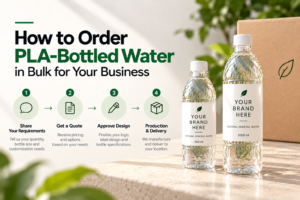
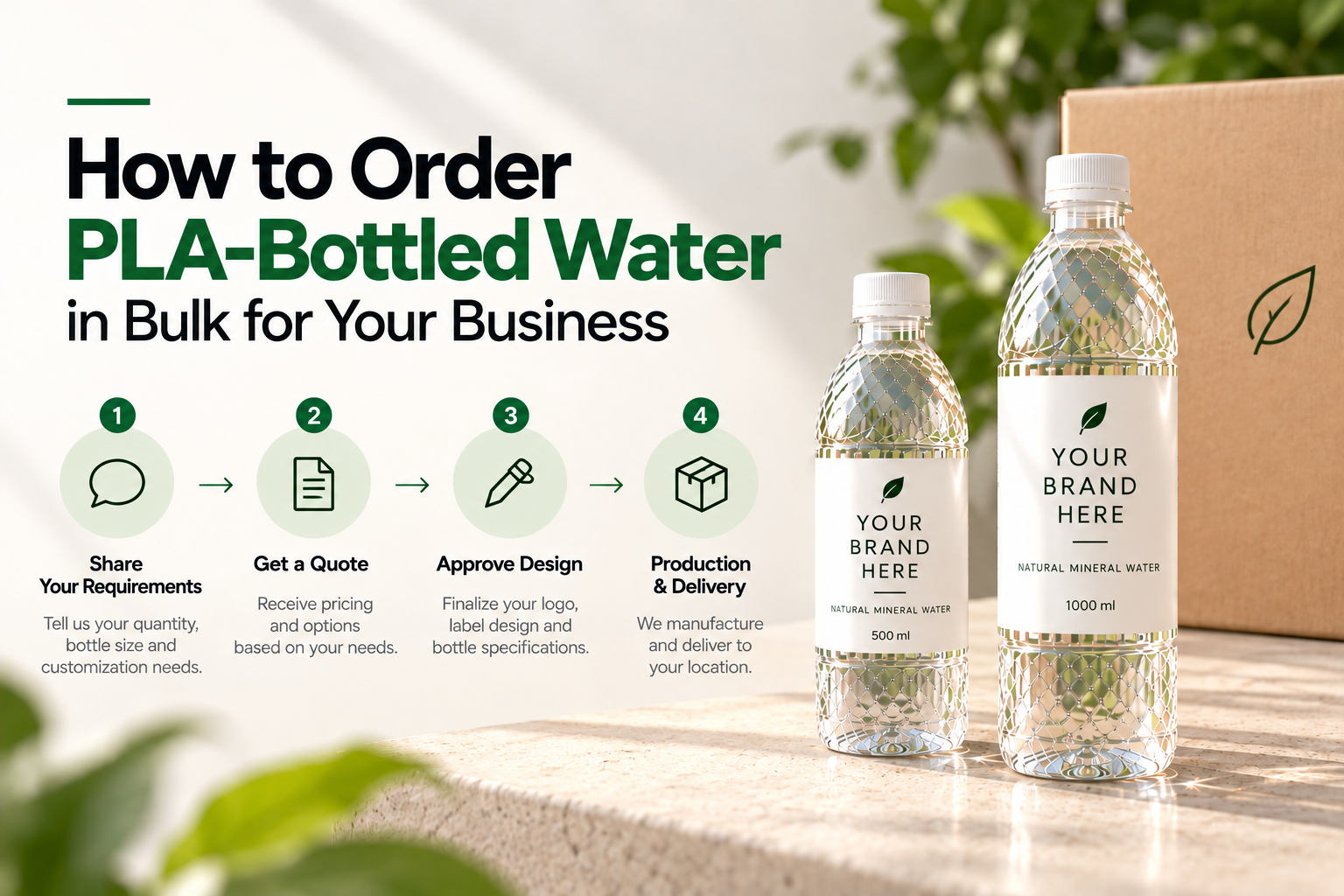
Start by estimating your demand, confirming the required product and packaging, deciding whether branding is needed, and preparing your delivery details. Then contact a supplier to discuss availability, order quantities, pricing and delivery terms.
What is the minimum order quantity for PLA-bottled water?
The minimum order quantity depends on the supplier and product arrangement. Contact the supplier to confirm the applicable minimum, available order increments and commercial terms.
Can I order PLA-bottled water with my own brand label?
That depends on the supplier’s branding capabilities and available arrangements. Ask whether private-label or white-label supply is available and confirm artwork requirements, approval procedures, costs and any quantity conditions.
How much bottled water should a business order?
Estimate the number of users or attendees, planned bottles per person and the period the order must cover. For recurring supply, consider consumption history, storage capacity and replenishment time.
What details are required for a bulk bottled water quotation?
Provide your business type, intended use, estimated quantity, product and packaging requirements, branding preferences, delivery location and desired timing. Ask the supplier to specify pricing, applicable charges, payment terms and quotation validity.
Can a supplier deliver bulk bottled water to multiple locations?
This depends on the supplier’s delivery capabilities and commercial terms. Provide each destination and the required quantities so the supplier can confirm feasibility and any additional charges.
Is PLA packaging automatically compostable?
No. Compostability depends on the specific material and product as well as the conditions and facilities available for processing it. Request product-specific documentation and disposal guidance before making environmental claims.
Final Thoughts
A successful bulk bottled water purchase starts with clear requirements. Estimate demand, confirm the product and packaging, decide on branding, provide delivery details and compare quotations using consistent commercial terms.
If you are exploring PLA-bottled drinking water for your business, prepare these details before approaching a supplier. It will make the discussion more focused and help you determine whether the available product and supply arrangement meet your needs.