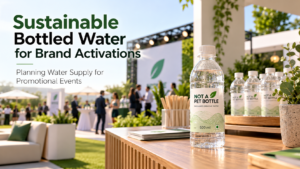
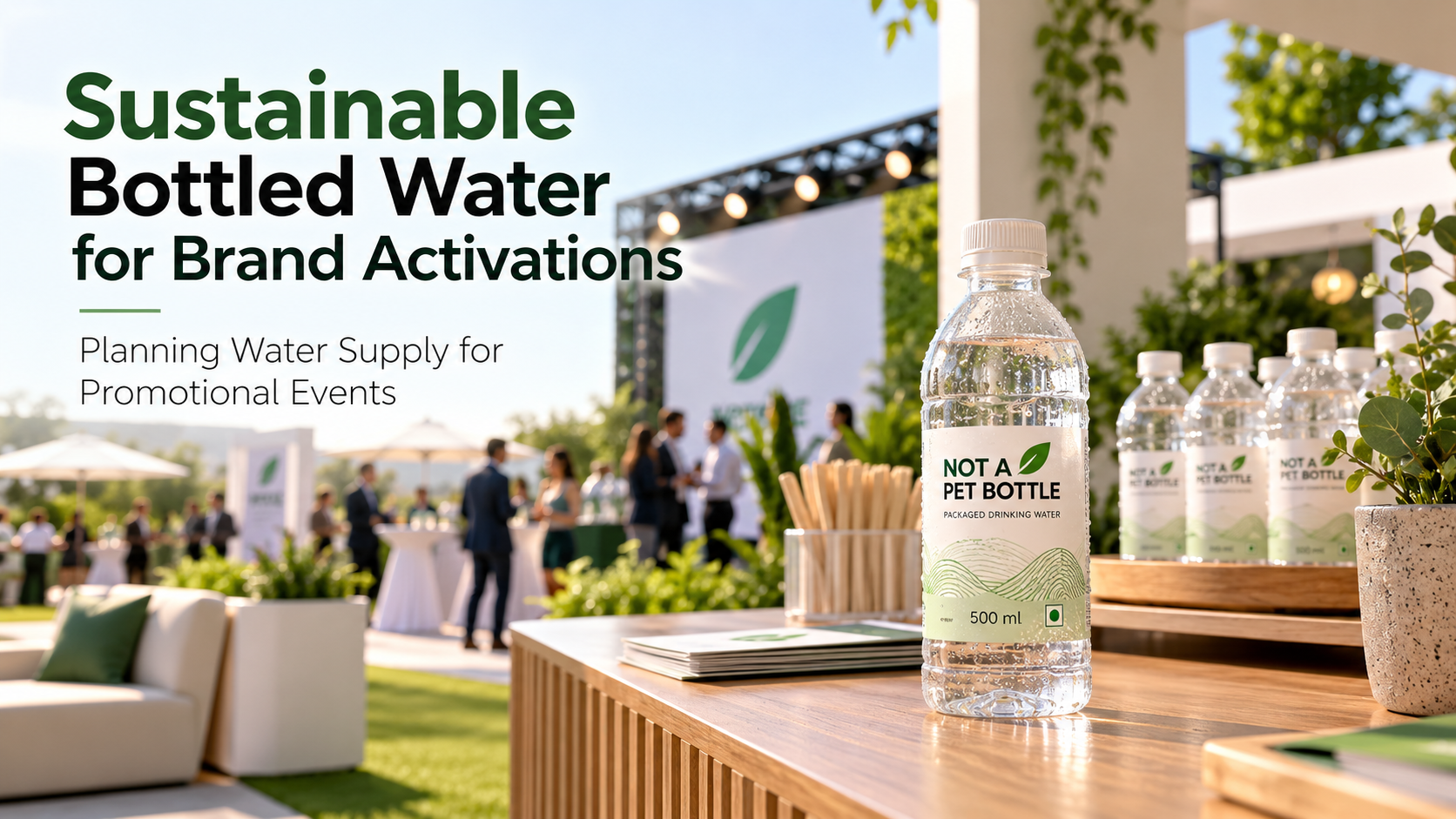
Brand activations are designed to create memorable experiences between businesses and their audiences. From product launches and pop-up experiences to trade shows, influencer events and corporate roadshows, every detail contributes to how people experience a brand.
Drinking water may seem like a small part of event planning, but it can be an important touchpoint. Attendees may interact with bottled water at registration desks, product demonstrations, hospitality counters and networking areas. For brands reviewing their sustainability practices, the packaging used for these occasions deserves consideration alongside other event materials.
Choosing sustainable bottled water involves more than selecting a bottle with an environmental message. Organisers must evaluate the packaging material, estimate demand, coordinate deliveries, understand branding requirements and plan what happens to the packaging after use.
This guide explains how businesses can approach bottled water procurement for promotional events while balancing brand experience, operational needs and responsible packaging decisions.
Why Bottled Water Matters at Brand Activations
Brand activations bring together several elements, including venue design, product displays, promotional materials, refreshments and staff interactions. Bottled water is often part of the hospitality arrangements, particularly at events where attendees spend several hours at the venue.
The bottle can also become part of the overall visual environment. It may appear on reception counters, meeting tables, hospitality stations or event photographs. As a result, the product and its packaging can influence how consistent the event feels with the brand’s identity.
For businesses investing in event marketing, evaluating bottled water packaging is an opportunity to make a more informed procurement decision.
Supporting a Consistent Brand Experience
A brand activation should feel cohesive. Signage, event materials, refreshments and other visible details should align with the experience the organiser wants to create.
Packaging can contribute to this consistency, provided the selected product meets the event’s practical requirements. Before finalising a supplier, consider the bottle format, presentation, available product specifications and whether the packaging is appropriate for the venue.
Reflecting Sustainability Priorities
Some businesses are reviewing the materials used in their promotional activities as part of broader sustainability initiatives. This may include event signage, giveaways, serving materials and packaged water.
If packaging is part of a sustainability commitment, claims should be accurate and specific. A bottle made using a plant-based polymer should not automatically be described as plastic-free, biodegradable in ordinary surroundings or compostable in every setting.
Organisers should understand the actual material and its limitations before including environmental statements in event communications.
How to Choose Sustainable Bottled Water for a Promotional Event
The right product depends on the audience, venue, duration and procurement requirements. Use the following considerations to evaluate available options.
1. Understand the Packaging Material
Start by asking what material the bottle is made from and what evidence supports the supplier’s description.
Conventional PET, glass, aluminium, cartons and PLA-based bottles have different characteristics. Their suitability depends on the intended use, transport requirements, handling arrangements and available end-of-life options.
PLA stands for polylactic acid, a polymer that can be produced using renewable biological feedstocks. It is commonly classified as a bioplastic, but it remains a polymer. Plant-based content does not, by itself, prove that a finished bottle is compostable or will biodegrade in natural surroundings.
Businesses considering PLA-based packaged water can learn more about PLA packaging in India and the material considerations involved.
The objective is to understand the available options rather than assume one material is automatically the most sustainable in every situation.
2. Match the Product to the Event Format
A small media preview has different requirements from a multi-day exhibition or a public product launch. The type of water and bottle format should fit the event’s service arrangements.
Before selecting a product, consider:
- The expected number of attendees.
- The event’s duration and schedule.
- Whether water will be placed at individual seats or served at shared stations.
- Available storage space.
- The bottle size and pack configuration.
- The venue’s rules for deliveries and waste handling.
Not A PET Bottle offers packaged drinking water and natural mineral water in NPB-PLA™ packaging. Businesses can review the available bottled water products to understand the product range before making an enquiry.
Confirm the current product specifications, quantities, pricing and delivery feasibility directly with the supplier before including them in an event plan.
3. Estimate Water Requirements Before Ordering
Underestimating demand can create service problems, while ordering excessive quantities can increase costs and leave organisers with unused stock.
Begin with the expected attendance and identify how water will be distributed. A simple planning formula is:
Estimated requirement = Expected attendees × Planned bottles per attendee
This is a starting estimate, not a universal consumption standard. Adjust it for the event’s duration, weather, catering arrangements, refill facilities and other available drinking-water options.
For events with separate zones, estimate requirements for each area, such as registration, speaker rooms, product demonstrations and hospitality counters. Add a reasonable reserve based on attendance uncertainty and the ability to replenish supplies.
For a more detailed calculation method, use this guide on estimating bottled water requirements for a large event.
4. Plan Branding Requirements Early
Brand activations often use branded merchandise and visual elements to reinforce recognition. Some organisers may also want the water packaging to complement the event identity.
If you require branded or private-label water, clarify your expectations before requesting a quotation. Ask the supplier whether the arrangement is available and confirm any minimum quantities, artwork requirements, approval stages, lead times and additional charges.
Do not assume that custom labels, logo placement or particular bottle designs are available without confirmation.
For an overview of the considerations involved, read private-label PLA-bottled water for businesses.
Allow enough time for any required approvals and production arrangements. Branding decisions made late in the process can affect delivery schedules and the overall event budget.
5. Coordinate Delivery With the Venue
Event logistics can be complicated by restricted loading areas, security checks, limited storage and fixed setup windows. Water delivery should be coordinated with the venue and the wider event schedule.
Before confirming an order, establish:
- The delivery date and acceptable time window.
- The receiving contact at the venue.
- Access and unloading instructions.
- The location where stock will be stored.
- Who will distribute the bottles during the event.
- How shortages or damaged products will be handled.
For events across multiple locations, create a separate delivery plan for each venue. Confirm quantities and receiving arrangements rather than assuming that one delivery schedule will suit every activation.
Businesses can also consult this guide on planning bottled water supply for corporate offices and events for broader procurement considerations.
How to Evaluate Environmental Claims Responsibly
Sustainability messaging can influence purchasing decisions, but vague or unsupported claims can undermine a brand’s credibility. Event organisers should verify the specific properties of the product they select.
Understand the Difference Between Common Terms
Plant-based describes a material made wholly or partly from biological feedstocks, depending on the specific product.
PET-free means the specified product or component does not contain PET. It does not necessarily mean the product contains no other polymers.
Biodegradable refers to a material’s ability to undergo biological degradation under specified conditions.
Compostable describes a product that meets relevant requirements for composting under defined conditions.
These terms are not interchangeable. In particular, PLA-based packaging should not automatically be described as home-compostable or as something that will break down quickly after being discarded.
Before using an environmental claim in event signage, promotional material or social media, check that it is supported by evidence relevant to the actual product.
Plan for Packaging After the Event
Responsible planning should continue after attendees have finished their water. Identify the venue’s waste-separation procedures and check whether suitable collection or processing arrangements are available for the selected packaging.
Do not assume that every alternative packaging material belongs in the same recycling or composting stream. Follow the applicable instructions for the specific product and local waste system.
This step helps ensure that the event’s packaging decisions are considered realistically rather than communicated through broad claims alone.
How Not A PET Bottle Fits Into Event Water Planning
Not A PET Bottle focuses on finished drinking water supplied in NPB-PLA™ packaging as an alternative to conventional PET bottles. Its range includes packaged drinking water and natural mineral water.
For brands exploring alternative-to-PET packaging for promotional events, the product range provides a starting point for evaluating the available water options.
Before making a commitment, share the intended event use, estimated quantity, delivery location and required timeline. Confirm product availability, pricing, order quantities, branding possibilities and delivery arrangements directly.
You can contact Not A PET Bottle about your requirements to discuss whether a suitable supply arrangement may be possible.
The important consideration is to match the product to the event’s actual needs and communicate its packaging characteristics accurately.
Frequently Asked Questions
1. What is sustainable bottled water?
Sustainable bottled water generally refers to drinking water supplied in packaging selected with environmental considerations in mind. The actual environmental impact depends on the packaging material, manufacturing process, transportation and available end-of-life options.
2. Why should brands consider sustainable bottled water for promotional events?
Brands may consider alternative packaging as part of their event procurement and sustainability planning. The choice can help align event materials with brand priorities, provided environmental claims are accurate and supported by evidence.
3. How much bottled water should I order for a brand activation?
Estimate the number of attendees and the expected number of bottles required per person. Adjust the quantity according to event duration, weather, catering arrangements, refill facilities and the availability of other drinking-water options. A reasonable reserve can help manage unexpected demand.
4. Can bottled water packaging be customised for brand activations?
Customisation may be possible depending on the supplier, product, order quantity and production requirements. Confirm artwork specifications, minimum order quantities, approval timelines, additional charges and delivery schedules before finalising the order.
5. Is PLA-based bottled water packaging plastic-free?
No. PLA, or polylactic acid, is a polymer commonly classified as a bioplastic. Although it can be produced using renewable biological feedstocks, it should not automatically be described as plastic-free, biodegradable in ordinary surroundings or home-compostable.
6. What should businesses check before choosing a bottled water supplier for an event?
Businesses should check product specifications, packaging material, bottle sizes, order quantities, pricing, delivery coverage, fulfilment timelines and relevant documentation. If sustainability claims influence the decision, ask for supporting evidence.
7. How can event organisers manage bottled water packaging after an event?
Organisers should check the venue’s waste-management procedures and identify suitable collection or processing options for the selected packaging. They should follow the product-specific disposal instructions rather than assume that all alternative packaging materials can be recycled or composted through the same systems.
8. Where can businesses enquire about sustainable bottled water from Not A PET Bottle?
Businesses can explore the Not A PET Bottle product range and use the contact page to discuss their event requirements, quantities, product availability and delivery arrangements.
Conclusion
Sustainable bottled water can be one consideration in planning a brand activation, particularly for businesses reviewing the packaging used across their promotional activities.
A practical approach starts with estimating demand, understanding the packaging material, checking product specifications, confirming branding requirements and coordinating delivery with the venue. Organisers should also consider what happens to the packaging after use and avoid unsupported environmental claims.
PLA-based bottled water is one option businesses may evaluate when looking beyond conventional PET. Its suitability depends on the specific product, the event’s operational requirements and the available end-of-life arrangements.
By planning these details early, brands can provide drinking water reliably while making informed packaging decisions that support a consistent and credible event experience.