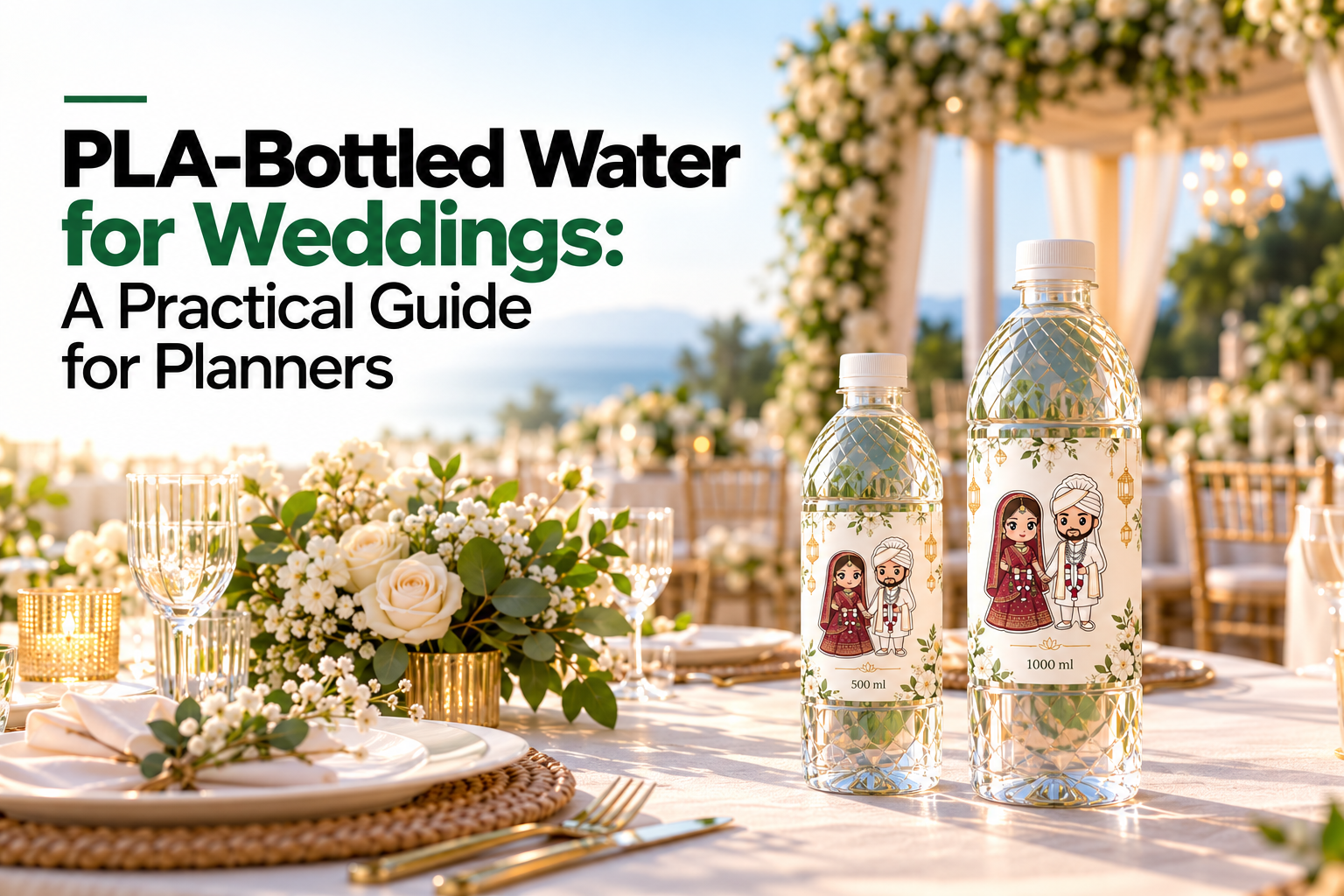
Wedding planning involves coordinating catering, décor, guest accommodation, transportation and venue logistics. Drinking water is another essential requirement that deserves careful planning. Ordering too little can disrupt service, while ordering too much can increase costs and create storage challenges.
For planners organising weddings across multiple functions or venues, the key is to estimate demand accurately, coordinate deliveries and maintain a practical contingency reserve.
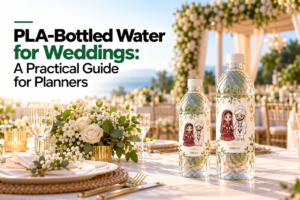
PLA-bottled water may also be worth evaluating for weddings where organisers are considering alternatives to conventional plastic packaging. However, product specifications, availability and disposal requirements should be verified before making a purchasing decision.
This guide explains how to plan bottled water for weddings, from estimating guest requirements to managing deliveries and backup stock.
1. Estimate Guest Numbers for Each Function
Start with expected attendance rather than the total number of people invited. A wedding ceremony, reception, welcome dinner and daytime function may have different guest counts.
Before calculating quantities, confirm:
- Expected attendees for each function
- Event duration and number of event days
- Indoor or outdoor venue arrangements
- Catering and existing drinking-water facilities
- Separate requirements for staff and vendors
- Whether guests will move between venues
Calculate each function separately. This makes it easier to allocate stock and avoid ordering based on assumptions that do not reflect actual attendance.
If RSVPs are still being confirmed, prepare a base estimate and a realistic higher-attendance scenario. Discuss order-change deadlines with the supplier before finalising quantities.
2. Calculate Water Requirements
Guest numbers alone do not determine consumption. A short indoor ceremony may require a different quantity from a full-day outdoor wedding.
Consider event duration, weather, dining arrangements, guest movement and access to other drinking-water facilities.
A simple formula is:
Estimated bottles = Expected attendees × Planned bottles per attendee
For example, if 400 guests are expected and the initial planning allowance is two 500 ml bottles per guest:
400 × 2 = 800 bottles
This is an illustrative calculation, not a universal consumption recommendation. Actual demand may vary depending on the event schedule, temperature, catering service and availability of refill points.
For multiple functions, calculate each event separately and add the estimates.
3. Plan for Every Function and Venue
Multi-day weddings often involve different locations, schedules and guest lists. Create a simple planning sheet to track each function.
| Function | Planning consideration |
|---|---|
| Welcome dinner | Guest count and dining arrangements |
| Daytime ceremony | Duration, weather and outdoor exposure |
| Wedding ceremony | Seating areas and guest movement |
| Reception | Dining, dancing and service stations |
| Farewell gathering | Remaining guests and departure schedule |
If guests attend several functions, calculate their requirements for each event. Do not assume that unused stock will automatically be available elsewhere; transferring it requires clear coordination.
Also decide where bottles will be stored and how they will reach tables, counters or hospitality stations. Having enough stock on paper is not enough if it cannot be distributed efficiently.
4. Coordinate Delivery in Advance
Delivery timing can affect the entire event setup. An early arrival may create storage problems, while a late delivery can conflict with catering preparation or guest arrival.
Before confirming an order, coordinate with the supplier and venue regarding:
- Delivery window: Confirm the date and time that suit venue access.
- Receiving contact: Assign someone to receive and check the order.
- Unloading point: Confirm vehicle access and the designated drop-off area.
- Storage: Ensure there is suitable space for the planned quantity.
- Stock distribution: Decide how supplies will reach each function.
- Replenishment: Establish how additional stock would be requested if needed.
For weddings across multiple venues, confirm delivery arrangements for each location separately.
Ask the supplier about availability, lead times, minimum order quantities and deadlines for changing the order. Do not assume urgent replenishment will be possible unless it has been confirmed.
5. Maintain a Contingency Reserve
Attendance may increase, an outdoor event may run longer than expected, or warmer weather may raise demand. A contingency reserve helps manage these changes.
Use this formula:
Planned quantity = Estimated demand + Contingency reserve
For example, if estimated demand is 800 bottles and the planner chooses an illustrative 10% reserve:
- Estimated demand: 800 bottles
- Reserve: 80 bottles
- Total planning quantity: 880 bottles
The reserve percentage should reflect the event’s risks and the reliability of replenishment. A remote venue with uncertain attendance may need a different buffer from a venue where additional supplies can be obtained easily.
Keep reserve stock clearly identified and assign someone to approve its use. This helps prevent backup supplies from being consumed before they are needed.
6. Track Stock Throughout the Event
A basic inventory sheet can help coordinators monitor supplies across multiple functions.
Record:
- Opening stock received
- Quantity allocated to each function
- Bottles distributed to service teams
- Remaining stock at each checkpoint
- Reserve stock available
- Damaged or missing units
- Closing balance after the event
Assign responsibility to a venue representative, catering supervisor or event coordinator. For multi-day celebrations, check stock after every function so that supplies intended for the next event remain available.
If a shortage occurs, check remaining stock and contact the designated supplier representative. Any transfer between venues should be recorded to avoid creating a shortage elsewhere.
7. Evaluate PLA-Bottled Water Carefully
Organisers considering PLA-bottled water should evaluate the specific finished product rather than relying on broad material claims.
Before ordering, confirm:
- Product specifications and relevant documentation
- Available bottle sizes and quantities
- Storage and handling requirements
- Pricing, delivery terms and minimum order quantities
- Any environmental claims and the evidence supporting them
- Appropriate disposal arrangements for the packaging
PLA-based packaging should not automatically be described as compostable in ordinary surroundings. Disposal outcomes depend on the specific product and the conditions and facilities available.
If sustainability is part of the wedding brief, coordinate with the venue and waste-management team before the event. This helps ensure that packaging claims and disposal instructions reflect the actual arrangements.
For product information, visit packaged drinking water and read more about sustainable water for hotels and events.
8. Use a Final Planning Checklist
Before confirming the order, check that the team has:
- Confirmed attendance for each function
- Estimated quantities based on duration and service arrangements
- Added a realistic contingency reserve
- Confirmed bottle sizes and product specifications
- Checked pricing, availability and delivery terms
- Agreed on delivery windows and unloading arrangements
- Assigned a receiving contact and stock coordinator
- Identified storage and distribution points
- Planned stock checks between functions
- Agreed on a response to delays or unexpected demand
- Verified packaging claims and disposal arrangements
Conclusion
Planning bottled water for weddings requires more than estimating the number of guests. Event duration, venue access, delivery schedules, storage and contingency stock all affect how reliably water can be provided.
Calculate requirements for each function, coordinate deliveries early and assign clear responsibility for inventory and replenishment. If considering PLA-bottled water, verify product specifications, availability and disposal arrangements before making commitments.
Not A PET Bottle focuses on finished drinking water in PLA-based bottles for business enquiries. Wedding planners can share their event requirements through the contact page to discuss possible supply options. Availability, quantities, pricing and delivery arrangements must be confirmed directly.
Frequently Asked Questions
How much bottled water should I order for a wedding?
Estimate attendance for each function and select a planning allowance based on event duration, weather, catering and other drinking-water facilities. Add a contingency reserve appropriate to the event.
When should bottled water be delivered to the venue?
Agree on a delivery window that fits venue access and setup schedules. Confirm lead times, unloading, storage and order-change deadlines with the supplier.
Should I order extra water for an outdoor wedding?
Consider a larger reserve if hot weather, long event hours or limited replenishment could increase the risk of shortages. Base the reserve on actual event conditions.
What should I check before ordering PLA-bottled water?
Verify product specifications, documentation, quantities, pricing, delivery arrangements and applicable disposal guidance. Do not assume all PLA-based packaging is compostable in ordinary conditions.
Can Not A PET Bottle supply bottled water for weddings?
Not A PET Bottle focuses on finished drinking water in PLA-based bottles for business enquiries. Potential supply options, quantities, pricing and delivery arrangements must be confirmed directly.