Choosing a packaged drinking water supplier for regular business deliveries requires more than comparing prices. Businesses need a supplier that can maintain consistent product availability, meet delivery schedules, handle changing demand, and provide clear communication throughout the supply relationship.
For corporate offices, hotels, restaurants, event venues, and hospitality businesses, an unreliable supplier can disrupt daily operations. Missed deliveries, inconsistent availability, unexpected charges, and slow issue resolution can create problems even when the initial quotation appears competitive.
Businesses exploring eco-friendly packaging must also consider product specifications and the evidence supporting environmental claims.
This guide explains how to compare packaged drinking water suppliers for recurring orders, calculate the actual cost of regular deliveries, and evaluate whether a supplier can support your business over the long term.
1. Understand Your Business’s Regular Water Requirements
Before comparing suppliers, estimate how much bottled water your business needs and how frequently it requires replenishment.
Recurring purchases differ from one-time orders because the supplier must meet demand consistently over weeks, months, or years.
Start by identifying:
- Average weekly and monthly bottle consumption.
- Required bottle sizes and water categories.
- Number of employees, guests, customers, or locations served.
- Preferred delivery frequency.
- Seasonal changes and peak-demand periods.
- Storage capacity at each delivery location.
- Expected changes in future consumption.
For example, a corporate office may require regular deliveries throughout the working month, while a hotel may experience higher demand during holidays and busy travel periods.
These differences affect the delivery schedule, order quantities, and level of supply flexibility required.
Prepare a realistic demand estimate and discuss it with prospective suppliers. This helps determine whether their product availability and delivery arrangements suit your operating requirements.
2. Check Whether the Supplier Can Maintain Consistent Supply
A supplier that fulfils one large order successfully may not necessarily be suitable for a recurring arrangement. Businesses need confidence that the supplier can maintain availability and meet agreed delivery commitments.
Evaluate Supply Reliability
Ask prospective suppliers about:
- Their ability to meet your expected recurring order volume.
- Product availability during periods of increased demand.
- Standard production and dispatch lead times.
- Advance notice required for repeat orders.
- Procedures for handling supply shortages.
- Arrangements for communicating delays or availability changes.
If your business operates across multiple locations, check whether the supplier can support the combined demand rather than evaluating each location in isolation.
For businesses considering sustainable packaging, the Not A PET Bottle product range provides a starting point for reviewing NPB-PLA™ packaged bottled water before discussing ongoing supply requirements.
When assessing any supplier, distinguish between stated supply capacity and demonstrated performance. Ask for realistic lead times and clearly documented commitments rather than relying on general assurances.
3. Compare Delivery Schedules and Location Coverage
Regular bottled water deliveries must fit your business’s operating schedule. A supplier may offer competitive pricing but still be unsuitable if deliveries arrive too early, too late, or at locations it cannot reliably serve.
Confirm Delivery Frequency
Discuss whether your business requires daily, weekly, fortnightly, or monthly deliveries.
The right frequency depends on consumption, storage capacity, order size, and transportation costs.
For example, a business with limited storage may prefer smaller, more frequent deliveries. A business with sufficient warehouse space may prefer fewer shipments if doing so reduces its total delivery cost.
Check Location Coverage
If you operate multiple offices, hotels, branches, or event venues, confirm the following:
- Which locations the supplier can serve.
- Whether different locations have different delivery charges.
- Whether deliveries can be coordinated under one purchasing arrangement.
- Whether each location can have its own delivery schedule.
- Whether receiving hours and unloading restrictions can be accommodated.
Establish Delivery Expectations
Before confirming an arrangement, agree on expected delivery windows, order cut-off times, and procedures for delayed or missed deliveries.
Clear expectations make it easier to monitor performance and resolve problems before they affect business operations.
4. Calculate the Total Cost of Recurring Orders
The lowest price per bottle does not always result in the lowest monthly purchasing cost. Businesses should compare the full cost of regular deliveries, including transportation, taxes, and any additional charges.
Identify Every Recurring Cost
Request a breakdown of:
- Price per bottle.
- Applicable GST and other taxes.
- Delivery and transportation charges.
- Minimum order quantities.
- Customized branding or packaging charges, where applicable.
- Additional fees for different delivery locations.
- Charges associated with smaller or urgent deliveries.
- Any other recurring service or handling fees.
Also clarify whether prices remain fixed for an agreed period or may change with advance notice.
Calculate Monthly Supply Costs
Use this formula:
Monthly supply cost = Total product cost + Delivery charges + Applicable taxes + Other charges
For example, suppose a business orders 5,000 bottles per month.
| Cost component | Illustrative amount |
|---|---|
| Product cost | ₹50,000 |
| Delivery charges | ₹3,000 |
| Illustrative GST | ₹9,540 |
| Total monthly cost | ₹62,540 |
| Effective cost per bottle | ₹12.51 |
This example assumes an illustrative 18% GST rate on the stated taxable amount. It is not a statement of the applicable tax rate for bottled water. Confirm the correct tax treatment with the supplier.
Compare suppliers using the same monthly quantity, product specifications, delivery locations, and tax basis.
For longer-term arrangements, calculate the expected quarterly or annual cost as well. This reveals whether a small difference in recurring charges becomes significant over time.
5. Evaluate Order Flexibility and Replenishment
Business demand does not always remain constant. Events, seasonal changes, occupancy levels, and operational expansion can affect bottled water requirements.
A suitable supplier should have a clear process for managing reasonable changes to recurring orders.
Ask:
- Can order quantities be increased during peak-demand periods?
- Can quantities be reduced when demand falls?
- How much notice is required to change a delivery?
- Can deliveries be rescheduled when business operations change?
- Are urgent replenishment orders possible?
- Does changing the order quantity affect the unit price?
- What happens if a scheduled delivery needs to be cancelled?
Understand any restrictions before entering a recurring arrangement.
Flexible supply can be particularly valuable for hotels, event organizers, and businesses with several operating locations. However, flexibility may involve higher delivery costs or minimum notice periods, so the commercial terms should be clear.
6. Check Communication and Account Management
Recurring supply relationships require ongoing coordination. Businesses should know whom to contact when placing orders, changing quantities, checking delivery status, or reporting an issue.
Establish a Clear Communication Process
Before confirming an arrangement, identify:
- The primary contact for order coordination.
- The process for submitting repeat orders.
- How order confirmations and invoices will be shared.
- How delivery updates will be communicated.
- Who handles complaints and urgent requests.
- The expected response time for operational issues.
For multi-location businesses, clarify whether one contact can coordinate the entire account or whether separate arrangements are required for individual locations.
Understand Issue Resolution
Ask the supplier how it handles short deliveries, damaged products, missed schedules, and discrepancies between orders and invoices.
Agree on a process for reporting problems, documenting them, and arranging suitable corrective action.
Clear communication reduces repeated follow-ups and helps businesses maintain continuity without spending unnecessary time managing routine purchases.
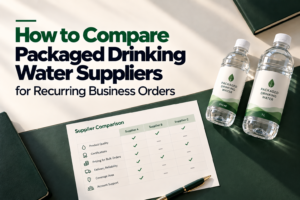
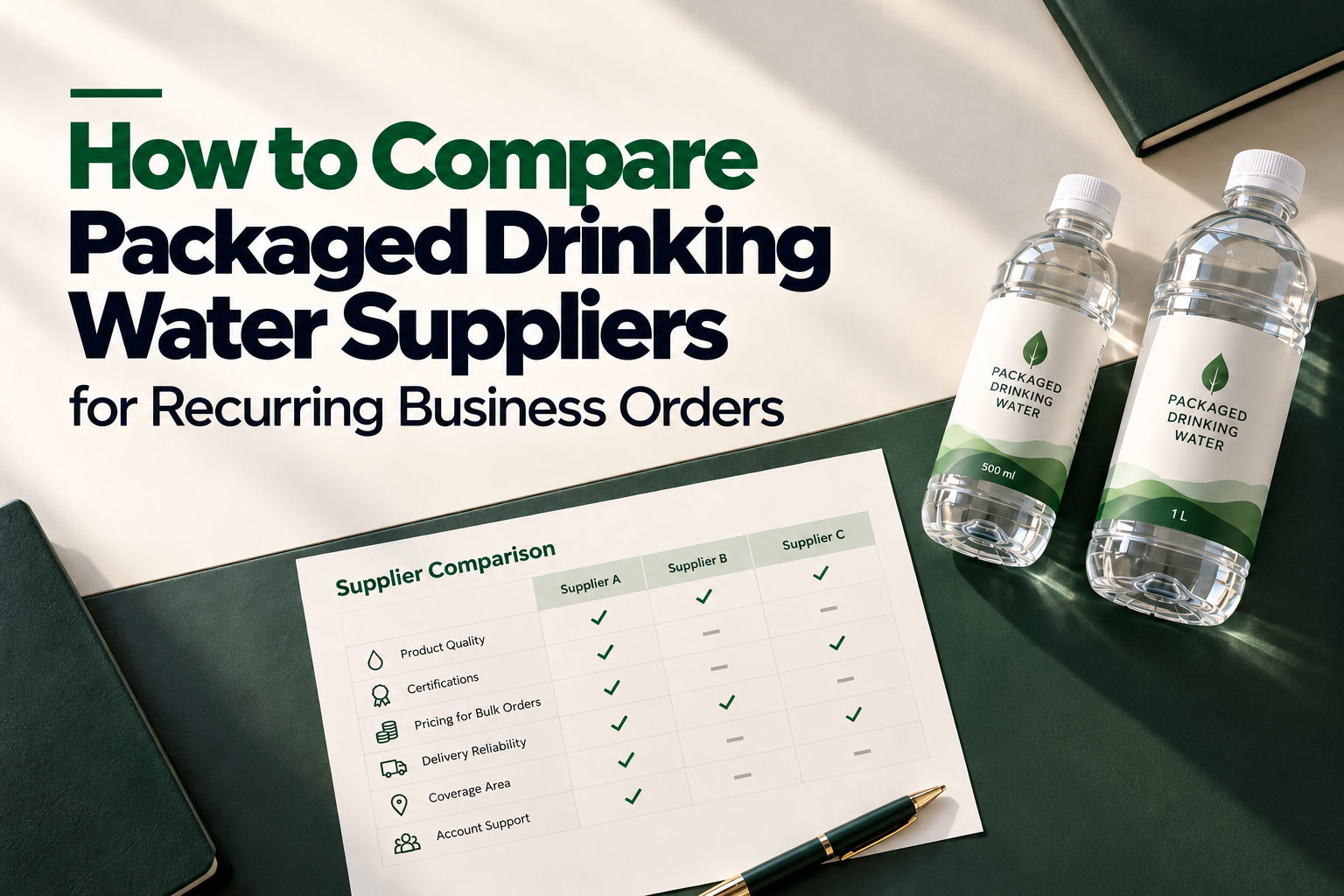
7. Compare Suppliers Using a Simple Scorecard
A consistent comparison framework helps procurement teams evaluate suppliers beyond the initial quotation.
Score each shortlisted supplier from 1 to 5, where 1 means poor performance or an unsuitable arrangement and 5 means strong performance supported by clear evidence.
| Evaluation factor | What to assess |
|---|---|
| Supply reliability | Ability to meet recurring demand |
| Delivery performance | Reliability of agreed delivery schedules |
| Location coverage | Ability to serve all required destinations |
| Total cost | Complete recurring cost, including taxes and delivery |
| Order flexibility | Ability to accommodate reasonable changes |
| Communication | Clarity and responsiveness of the main contact |
| Issue resolution | Process for managing delays, shortages, and damage |
| Documentation | Availability of relevant product and compliance records |
Use the same criteria for every supplier. Where possible, base scores on written commitments, documented performance, and transparent pricing rather than assumptions.
A supplier with the lowest unit price may not be the best choice if its delivery arrangements, location coverage, or communication processes create operational risks.
8. Questions to Ask Before Confirming a Recurring Arrangement
Use this checklist during supplier discussions:
- Can you meet our expected monthly order volume?
- What is the usual lead time for repeat orders?
- Which delivery locations can you support?
- Can deliveries be scheduled according to our operating hours?
- What happens if a scheduled delivery is delayed?
- Can we adjust order quantities when demand changes?
- Are transportation charges different for different locations?
- Will pricing remain fixed for an agreed period?
- Who will manage our account and delivery-related queries?
- How are damaged products or order discrepancies handled?
- What product specifications and compliance documents are available?
- What payment, cancellation, and notice terms apply?
Review the answers before making a commitment. Important supply expectations should be documented in the agreed commercial terms.
9. Choosing an Eco-Friendly Bottled Water Supplier
Businesses evaluating sustainable packaging should consider material specifications alongside the reliability of the finished bottled-water supply.
The keyword eco friendly water bottle manufacturer may be relevant when researching businesses involved in sustainable bottle production. However, procurement teams buying drinking water for immediate business use should also assess the finished product, delivery arrangements, and supplier support.
When evaluating PLA-based packaging, review the NPB-PLA™ material information and ask for documentation supporting relevant material and environmental claims.
Consider whether the packaging meets your operational requirements, what disposal options are realistically available, and whether the total delivered cost fits your purchasing budget.
No packaging material should be selected solely on the basis of a broad sustainability claim. Product suitability, documented specifications, and actual end-of-life arrangements should inform the decision.
Conclusion
Comparing packaged drinking water suppliers for recurring business orders requires a long-term perspective. Supply consistency, delivery reliability, location coverage, flexible replenishment, transparent costs, and effective communication all contribute to a dependable purchasing arrangement.
Rather than choosing solely on the lowest quoted price, evaluate how each supplier performs across the factors that matter to your business. A structured comparison can help reduce operational disruptions and make recurring purchasing easier to manage.
For businesses exploring NPB-PLA™ packaged bottled water, Not A PET Bottle offers a product option to consider when evaluating packaging requirements and regular supply needs.
Visit Not A PET Bottle to learn more about the offering, or contact the team to discuss your business requirements, expected order volumes, and recurring delivery arrangements.